
Building a Product Configurator: Lessons From Custom Sex Doll Retail
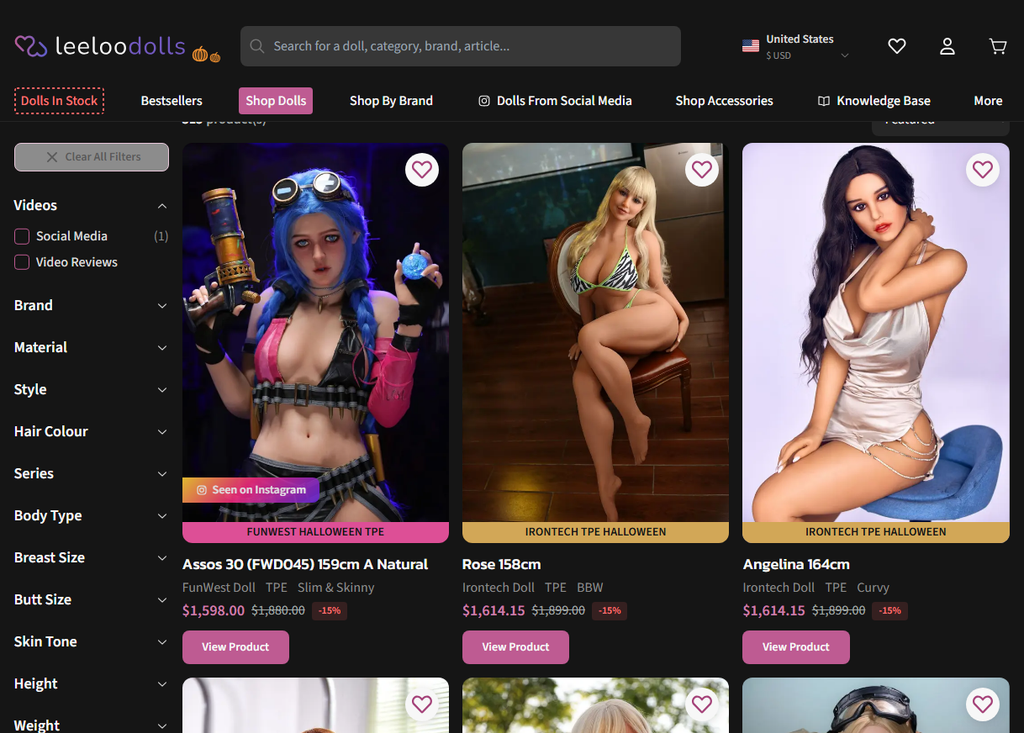
A product configurator is the part of an online store that lets customers combine options into a valid product and see the price update as they go. Custom sex doll retail is a useful case study, because a single doll can involve dozens of interdependent choices, from head and body to skin tone, skeleton and extras.
Most configurator tutorials use t-shirts or laptops. Those are easy: a few independent options and a fixed price table. Products with real dependencies expose the design problems much faster.
Key Takeaways
- Model options as a tree with explicit compatibility rules, not as a flat list.
- Keep validation on the server, even if the UI validates too.
- Store pricing as rules attached to options, not as precomputed combinations.
- Show what is unavailable and why, instead of hiding it.
Start With the Data Model
A doll order follows a clear hierarchy: body first, then head, then appearance, then hardware. Body choice constrains which heads fit, because neck connectors differ. Material choice can constrain which skin tones exist. A simple structure captures this:
{
“option”: “head”,
“value”: “head_42”,
“requires”: { “neck_connector”: “M16” },
“price_delta”: 0
}
Each option declares what it requires and what it changes. A configurator engine then evaluates the current selection against those rules. Choosing between a tpe sex doll head and a head from the realistic silicone sex doll range is a typical example of an option with dependencies.
Product Configurator Compatibility Rules
Rules fall into three types. Requires: option A needs option B. Excludes: option A cannot coexist with option C. Defaults: choosing option A sets option D unless the user overrides it. Keep rules in data, not in front-end code, so non-developers can update them when a factory adds a new head or body.
When a rule blocks a choice, show it disabled with a short reason, such as “Not available with this body”. Hiding options entirely confuses users who saw them earlier in the flow.
Test rules with real combinations, not only unit tests on single options. In custom sex doll retail, one new body can affect dozens of existing heads, so a test suite that loads every head against every body catches broken combinations before customers do. The same approach works for furniture, bikes or any product configurator with physical constraints.
Pricing Logic
Avoid precomputing a price for every combination; the numbers explode quickly. Attach a price delta to each option and calculate the total on every change. For the final order, recalculate on the server from the submitted option IDs. Never trust a total sent from the browser.
Previews and Perceived Quality
Customers buying a high-value custom product want reassurance. Layered images work well: a base body image with transparent overlays for skin tone, hair and eyes. Where overlays are not realistic enough, show real photos of the closest existing build and label them clearly.
State, Sharing and Saving
Encode the selection in the URL so users can bookmark or share a build. Save drafts server-side for logged-in users. For sensitive products, keep shared links free of personal data and make sure previews do not leak into search indexes.
What Retailers Get Right
Specialist stores in this niche handle complexity with human help as well as code. The sex doll e-commerce store Leeloo Dolls, for example, pairs its custom made sex doll options with a free consultation before ordering, so edge cases that rules cannot express are checked by a person. That hybrid approach is worth copying in any configurator with expensive mistakes.
FAQ
What is the hardest part of a product configurator?
Modeling compatibility rules cleanly so they stay maintainable as options grow.
Should pricing be calculated in the browser?
Show it in the browser for speed, but always recalculate and validate on the server.
How should unavailable options be displayed?
Disabled, with a short reason, so users understand the constraint instead of losing the option.


